
Image
Since the end of the Cold War, the Netherlands Armed Forces have operated in highly diverse and demanding environments – from peacekeeping missions in the Balkans and Africa to combat operations in Afghanistan, air policing and deterrence deployments in the Baltics, and security force assistance in Iraq and Africa. Each deployment generated experiences offering opportunities for institutional growth and adaptation. Yet a troubling pattern has emerged in research findings: the translation of these experiences into enduring organisational learning has been uneven.1] Under the right conditions, some lessons were captured and applied effectively. However, others were lost in bureaucratic processes, (internal) political debates, or the day-to-day churn of operations. That the ability to learn and adapt is gaining attention was underlined by a recent column by General Onno Eichelsheim, Chief of Defence, in which he called for the Armed Forces to learn from Ukraine’s experiences in adaptation.[2] This raises an important question: where and how can the Dutch military enhance its lessons learned process,[3] and utilise experiences for increased operational performance?
To answer this question, the article sets out to provide a thorough analysis of the Joint Lessons Learned Process and offer suggestions for remedial action based on observations and the academic literature. Examining the challenges of military learning and providing potential remedies are highly pertinent as the Netherlands Armed Forces are currently recalibrating to high-intensity conventional warfare on the European continent after decades of expeditionary stabilisation missions. Timely military adaptation, innovation and emulation during this challenge will depend greatly upon capacity of the Netherlands Armed Forces to leverage the Joint Lessons Learned Process for effective inter- and intra-organisational learning.
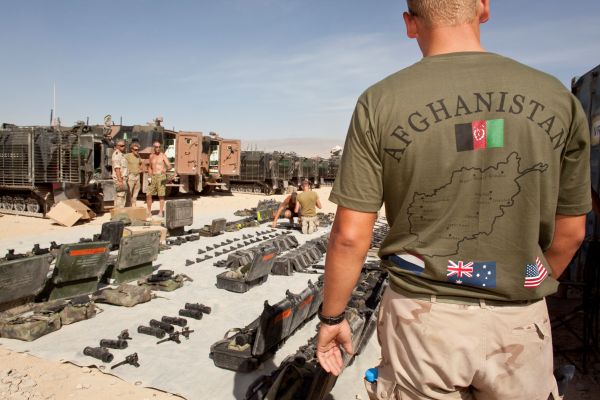
Dutch Forces in Afghanistan. This article draws upon research projects on the lessons learned processes related to the Dutch missions to Afghanistan. Photo Picture Alliance, Ton Koene
While the challenges and maladies of Dutch military’s learning processes have been amply described and analysed, this article aims to provide a focused analysis on one seminal topic: the Joint Lessons Learned Process and its disconnect with those of the services. In the Dutch context, expeditionary missions are executed by the Joint Defence Staff, while training, exercises and mission preparation are the responsibility of the services. As such, the formal Lessons Learned Process in relation to missions is in the purview of the Directorate of Operations at the Ministry of Defence. In this article, the authors analyse the effectiveness of this central process and, in particular, its disconnect with the lessons learned processes of the services. Furthermore, the article explores potential remedial institutional interventions to address the issues identified with the Joint Lessons Learned Process. By offering potential solutions, the authors seek to combine academic insights with practical utility.
The article draws upon the authors’ research projects on the lessons learned processes related to the Dutch missions to Afghanistan (ISAF) and Mali (MINUSMA) and various training exercises.[4] Based on primary (official) sources, academic scholarship, engagements with practitioners and over 74 interviews with service members and civil servants, the authors have obtained a thorough insight into the Netherlands Armed Forces Joint Lessons Learned Process.[5] This detailed empirical perspective enables an analysis of the Dutch learning capacity and identification of the elements which require this concerted remedial action.
The article is structured into three parts. In the first section, the recent literature on military learning is analysed briefly to provide a theoretical overview on organisational learning in the armed forces, in order to identify the key barriers to and enablers of organisational learning. The second section will then examine the barriers to learning within the Joint Lessons Learned Process and the wider repercussions for the military. Three broad categories of barriers are identified: process, conditional and professional.[6] Finally, the third section explores best practices that can be implemented to improve the Joint Lessons Learned Process of the Dutch military through four action themes: integration and senior leadership sponsorship, professional incentives, mission exploitation symposia, and analytical continuity.
Theoretical underpinnings: barriers and enablers
How military organisations change to face current or emerging challenges has been subject of intense study for the last few decades.[7] Colloquially known as Military Innovation Studies, early works emphasised innovation being initiated from either military leadership or even civilian intervention. These studies focused more on organisational change in times of peace than war time adaptations.[8] Scholar Stephen Rosen argued that change in war is circumscribed due to the way that urgent operational requirements and time constraints preclude organisational upheaval that is associated with innovation.[9] Indeed, scholarly attention towards learning from wartime experience and horizontal dissemination was initially limited until Adam Grissom directed attention firmly towards bottom-up adaptation.[10] He contended that troops who are faced with operational challenges will be the first to try to adapt. Moreover, when their adaptations are not sufficient, they will provide signals to the wider institution for new capabilities or strategies.[11] At the time, this notion provided a new impetus to study the ability of soldiers in the field to improvise and adapt.[12]
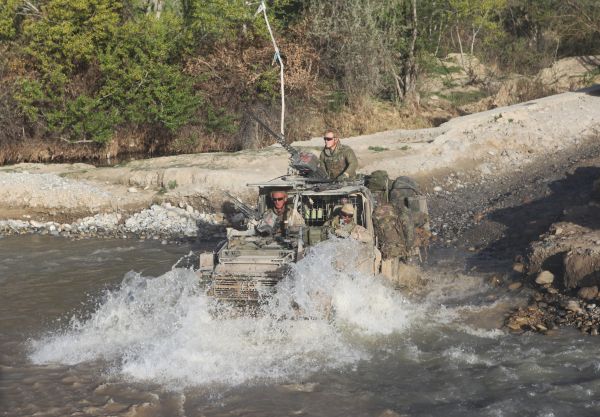
Troops who are faced with operational challenges will be the first to adapt. Photo Picture Alliance, Ton Koene
The wars in Iraq and Afghanistan were an important catalyst to the study of adaptation. Here, Western armed forces were confronted with insurgencies for which they were conceptually ill-equipped. Generally, the deployed units strove to adjust their tactics, techniques and procedures (TTPs) to combat elusive adversaries. Simultaneously, however, their bureaucratic parent institutions often struggled to keep up with the urgent operational demands for additional capabilities. Where successful adaptation was identified, the salient factors were leadership, strategic (or organisational) culture, civil-military relations, and international politics.[13] A further recurring theme in this literature was that the institutional level is often reluctant to enact drastic organisational changes for what were considered irregular wars. Despite the urgency posed by the operations at hand, the militaries had to maintain a precarious balance to ensure readiness for potential future challenges, most notably conventional wars.[14]
Although the new emphasis on the role of experience from operations was welcome, academic works at the time generally restricted their analyses to influencing factors – as if they were fixed elements – and under-theorised the processes of organisational change.[15] An alternative approach began to look to the literature on organisational learning to better understand military learning processes, yet early works also suffered from the aforementioned defects of top-down direction and light-touch application of theory.[16] This meant they frequently omitted any real consideration of the informal lesson-sharing processes that feature in the daily activities of personnel and functions. More recent publications head off those deficits by integrating the informal as well as formal learning methods that can potentially facilitate tactical, operational and strategic level change.[17] These analyses of the interplay between informal and formal processes shed light on impediments to effective organisational learning and point out potential remedies.
In theory, formal lessons-learned processes function as the conduit between experiences from the field and institutional adaptation. However, as studies show, adoption of formal processes such as NATO’s Lessons Learned Process is in itself insufficient for effective learning.[18] Effectiveness requires a culture that promotes critical reflection, the institutionalisation of knowledge, and active translation into accountable remedial actions to improve training, concepts and capabilities. Consequently, the organisational culture of armed forces should warrant a thorough resourcing in terms of budget, intellectual capital and attention.[19] Moreover, the dialectic between informal lessons and institutional requirements constitutes a dynamic interplay that forms the core of military learning processes.[20] Thus, when formal processes do not work as intended, or seem misaligned with perceived realities, practitioners generally seek out informal work-arounds. In short, understanding a military’s learning capacity cannot be limited to analysing operational outcomes, but must also include analysis of how practitioners across different communities engage with formal and informal lesson learning processes in their daily work practices.[21]
In summary, the key theoretical insights are that effective learning requires both formal processes and informal practices with leadership commitment being essential to supporting changes to those aspects of institutional culture that shape whether lessons translate into capability. The Netherlands Armed Forces have adopted NATO’s Lessons Learned Process and established formal structures at both joint and service levels. Yet as the empirical evidence from the recent study demonstrates, adopting formal procedures has not been sufficient to ensure effective organisational learning. Three categories of barriers emerged from the analysis of that evidence, illuminating why the gap between doctrine and practice persists. These barriers will be addressed next as the cornerstone of our analytical framework for this article.
Barriers to formal learning at the joint level in the Netherlands Armed Forces
Since 2005, the Directorate of Operations, situated at the Defence Staff, is responsible for planning, executing and evaluating military missions. The Directorate’s J7 Branch is responsible for the Joint Lessons Learned Process related to missions. Notably, the Defence Staff also has a Department of Evaluations. Formally, this department’s responsibility is to evaluate missions, learn from them and provide accountability on military missions towards the Dutch Parliament. Although the Department of Evaluations has a slightly different task and reports directly to the Chief of Defence, it works intimately with the J7 Branch.[22]
As recent studies attest through the gathering of substantial empirical data, the effectiveness of the Joint Lessons Learned Process has proved to be limited.[23] While a number of deficiencies of the process have been identified and demonstrated, further analysis of these barriers is warranted in order to propose targeted remedial actions as a systematic set of improvements. As a result of further analysis of their research,[24] the authors identified three broad categories of barriers in the Joint Lessons Learned Process. The first category entails barriers related to the process itself. A second category consists of the environing conditions supporting or hindering the process. The third category involves professional aspects of how personnel of the armed forces relate to the Joint Lessons Learned Process. In this section the authors explain this categorisation and the relationships between them by elaborating on these barriers with empirical findings.
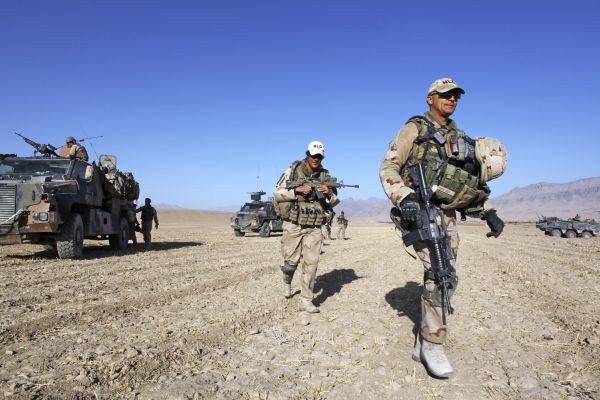
Operational tempo outpaces bureaucratic processes, which undercuts the learning processes from missions. Photo Picture Alliance, Ton Koene
Process barriers
Although the Netherlands Ministry of Defence has adopted NATO’s Lessons Learned Process, the authors have identified several process-oriented deficiencies that impede effective learning. First of all, there is a gap between the formal process at the joint level and practical arrangements within the services or even within units. In their day-to-day operations, units encounter challenges that require swift remedial action. If this is within its ability, a unit will generally act on it. When an identified problem is more substantial and requires wider institutional attention, for instance when new equipment is necessary to overcome the challenge, a different process follows in which the Directorate of Operations has no role. As such, the semi-formal and formal learning processes were not linked.
This divergence is both driven and exacerbated by the disconnect between the roles and responsibilities of the Defence Staff and the services. While the Defence Staff is concerned with the planning and execution of missions, the services are tasked with mission preparation for their units. However, mission evaluations from recent operations often show identified lessons that pertain more to the mission preparation than its execution and the Defence Staff has limited influence in remedying such problems. A further compounding element is that deployed units generally consist of temporary task organisations made up from different units that have different competencies and, therefore, a distinct approach to overcoming problems.[25]
Another process-oriented deficiency is a limited analytical capability. While data are collected, the Defence Staff lacked the resources to thoroughly analyse reports to recognise recurring patterns. As a result, individual observations remain isolated with little consideration of the cumulative implications of tactical issues for the operational and strategic levels. The lack of analytical products impedes the feedback loop. Individual officers who contributed their observations often did not receive any feedback on their reports or information on whether the organisation took any remedial action on identified problems. As one MINUSMA officer stated: ‘I talk with my predecessors, dig out documents from contacts, and rely implicitly on the pre-deployment training unit; but it’s all hurried, and when it is time for me to file my Alpha-1200 [end of rotation report], I don’t know if anyone in HQ or the Ministry is paying attention.’[26]
A third element related to the formal process concerns the tension between different time horizons. Of course, operational tempo outpaces bureaucratic processes such as procurement of equipment. Yet, this reality notwithstanding, these temporal differences undercut the learning processes from missions. During operations in Afghanistan, the Ministry of Defence strove to align the distinct tempos in light of the urgent operational requirement to confront the threat posed by improvised explosive devices (IEDs). To expedite an organisational response, a Task Force Counter-IED was established. While this organisation was relatively effective, it had to jettison all formal processes to attain results, thereby underlining the disconnect between operational and institutional timelines.[27]In sum, the Joint Lessons Learned Process suffers from a disconnect between semi-formal arrangements within the services, limited analytical resources and a mismatch in operational and bureaucratic time horizons.
Conditional barriers
This category of barriers can be divided into three elements: proximity of lessons, lack of robust tools to store and disseminate lessons and organisational politics affecting priorities. Our study shows that service members value informal and proximate, unit-specific knowledge while the formal process is viewed sceptically. Although practice-based experiential learnings are invaluable to initiate adaptations, the data indicate that during missions, this informal approach did not feed into the Joint Lessons Learned Process – situation-specific problems are dealt with, insights passed on in HOTO or training, bureaucratic form-filling clashes with time pressures. Furthermore, this hindered the diffusion of lessons. If lessons are disseminated over rotations, this was mostly due to personal relations rather than structural arrangements: ‘Institutional knowledge of how to operate within the UN mission was therefore gone; we weren’t interested, we didn’t invest to keep it in our organisation.’[28]
A further condition that affects formal learning is the dearth of tools to store and disseminate knowledge. Although there was a central lessons-learned database, its use was limited throughout the armed forces; eventually, the database was discontinued and the J7 Branch resorted to managing lessons via a spreadsheet. The recording of lessons centrally became even more limited to formal reporting: ‘Our workaround was to record and manage lessons learned using Excel and then transpose that into formal reporting and systems.’[29] Instead, officers communicated their observations to colleagues through informal means such as verbally or over e-mail. Consequently, beyond the obligatory post-mission reports, the feeding of observations into the formal process was constrained by these practices. This over-reliance on informal networks makes organisational knowledge fragile and vulnerable to personnel turn-over. Unfortunately, turn-over among service members is rather high in the armed forces, both within missions as in normal postings in the Netherlands.
The final conditional element is that of organisational politics. One important aspect of this barrier is shifting priorities as a result of political guidance. A senior officer stated: ‘The military leadership are unable to translate lessons-learned at the strategic and operational level quickly and swiftly into the armed forces, because every time they bump into political friction from central guidance, and it stops.’[30] Following several incidents, such as a fatal accident with a mortar in Mali in 2016, safety during missions and exercises became a paramount consideration, which had significant attention at the political level and the Ministry’s leadership. As important as this emphasis on safety was, it diverted scarce resources from other (operational) concerns. Tellingly, a significant number of interviewed leaders within both the ministry and the services viewed the Joint Lessons Learned Process as peripheral to their core business, reducing their willingness to allocate resources and attention to the Lessons Learned Process. The leadership’s lack of prioritisation for the Joint Lessons Learned Process is detrimental to its effectiveness, which is a conclusion that feeds into the last category of barriers.
Professional barriers
The lack of meaningful organisational change based on observations resulted in a feeling that participation in the Joint Lessons Learned Process was futile. A typical statement by interviewees was: ‘It does not feel that anything happens with observations.’ More specifically, a senior officer observed: ‘I presented the report, with all the missions I executed and the recommendations, and lessons identified and lessons-learned, but if it initiates some changes, I don’t know. […] I have never had feedback from the Ministry of Defence, what they did with my Alpha 1200. What is it like? It is self-help.’[31]
Furthermore, our findings indicate that while there is an informal culture of learning, officers were apprehensive in sharing encountered problems as this might reflect on their leadership. As an interview partner related: ‘Hierarchy and stovepipes get in the way… Culturally, informally there is a culture of learning […]. But the overall sense remains that knowing something is knowing about my failings or about complaints. It is usually not something to share.’[32] This is reinforced by the absence of positive signals in promotion criteria, whereby promoting and producing lessons-learning would be explicitly identified as a required characteristic for further leadership roles.
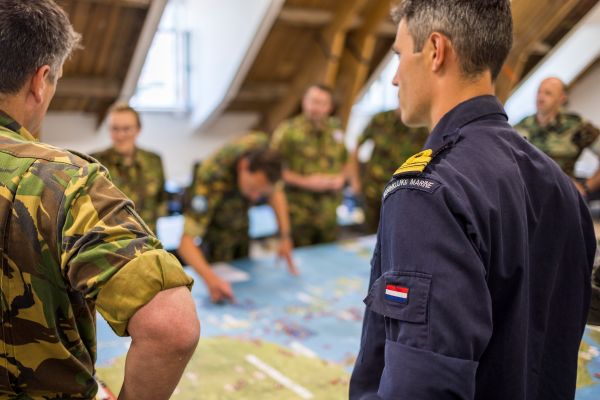
Perceptions of different learning cultures among the services complicate the formal learning process at the joint level. Photo MCD, Jarno Kraayvanger
A final aspect is that there is a perceived fundamental division between the services in their learning culture. Generally, the Air Force was considered to be the most geared towards learning lessons while the Army had the most limited capabilities to learn from operations, with the Navy taking up a position somewhere in the middle.[33] Although this can be viewed as a matter of perspective, these perceptions complicate the formal learning process at the joint level due to the different outlooks between the services, and thus affect the sense of professional engagement and identity. In conclusion, these more intangible barriers to the Joint Lessons Learned Process can potentially prove to be the most intractable. To remove this and the other barriers remedial action is needed.
Implications of these barriers
These three barriers have concrete operational implications. When the Joint Lessons Learned Process cannot capture and disseminate critical observations – such as tactical innovations in responding to encountered threats, or evolving tactics by adversaries – units deploying on subsequent rotations are deprived of institutional knowledge. They already typically rely heavily on informal networks pre-deployment, but following Handover-Takeover, further informal learnings may or may not reach them. The lack of reliable institutional lessons learned processes means they face operational challenges without the benefit of all potential experience. This places personnel at unnecessary risk and degrades mission effectiveness.
Moreover, when the same problems recur across multiple rotations without institutional response, or efforts to address it are ignored in promotion processes, these signal to deployed personnel that their observations are undervalued which further erodes participation in the formal process. The disconnect between joint and service-level processes adds to this self-reinforcing spiral: as confidence in the system declines, the quality of inputs may deteriorate, which in turn reduces the system’s effectiveness.
Opportunities through best practices
The imperative of enhancing the armed forces’ learning capacity is gaining traction among its personnel. Yet, as officers frequently commented, they see little improvement in the lesson learning capability of the Netherlands Armed Forces: ‘But my experience is that I really see…no changes in nine years. And that is kind of concerning when you are out in the field.’[34] Therefore, to address the identified barriers to learning at the joint level, remedial action is warranted. Based on international research and observed best practices, four action themes are identified to enhance the Joint Lessons Learned Process: integration through senior leadership sponsorship; restructuring professional incentives and career practices; exploitation forums proximate to operations; and finally, analytical continuity.
Integration through senior leadership sponsorship
One of the most consistent factors cited in the literature as key to successful learning practices is leadership. An organisation’s leadership can set the example on willingness to evaluate the organisation’s effectiveness. Moreover, they can award resources to processes, assign leaders at lower levels and ultimately enact change.[35] Yet, at the same time, operational experiences, insights and potential solutions are commonly first initiated at lower levels in the military. This reflects the insights of much of the aforementioned literature on bottom-up adaptation. Generally, troops and units will expend significant efforts to overcome operational challenges. However, these initiatives can only be effective up to a certain point. Institutional sponsorship is often needed to implement and disseminate new capabilities throughout the force.
What is currently needed is an explicit mandate by senior leadership to elevate and enhance the Joint Lessons Learned Process. Furthermore, the Joint Lessons Learned Process should link the extant processes and initiatives within the services. In other words, senior leadership should prioritise the learning capacity of the joint force and provide sufficient resources to it. At the time of writing, the J7 Branch within the Joint Force Command (JFC) is essentially the senior custodian of the Joint Lessons Learned Process.[36] However, this branch is geared specifically to missions and has limited control to follow up on lessons identified.
To remedy this, the establishment of a joint cross-functional team is warranted.[37] By including participants from various directorates of the Ministry of Defence (for instance Policy, Plans, Military Strategy, Operational Readiness and the JFC) and the services, a comprehensive coordination mechanism for learning can be built.
Furthermore, a cross-functional team with mandate and resources can oversee the learning process and the implementation of necessary remedial actions based on lessons identified. It can link the learning processes of the services and assist in learning from (joint) exercises. By integrating disciplines in a cross-functional team, an overarching learning process can be created that enhances the current lower-level processes. Moreover, it can harness and support the various initiatives to improve learning capacity. To be sure, this is not a call for a large new staff directorate, but rather a close collaboration within the Ministry of Defence, including key functional areas and with sufficient sponsorship by its senior leaders. Of course, this requires the leadership to be conducive towards candid assessment of the organisation’s performance. Potentially, a small Joint Warfare Centre with sufficient resources could eventually provide this coordinating function between directorates and the services.
Restructuring professional incentives and career practices
While the attention of senior leadership for the lessons-learned process is a crucial starting point for enhancing its performance, the professionalisation of service members tasked with the process is a further fundamental consideration. As Stephen Rosen argued, enacting meaningful change in armed forces is often dependent on whether promising and rewarding career paths can be generated.[38] Currently, positions in knowledge development, doctrine or lessons-learned are regarded as neutral to career prospects at best. In discussing organisational learning roles, a former mission commander summed up this common viewpoint emphatically: ‘The selection criteria for promotion are not well-suited to our current needs, they are based on obsolete career path designs.’[39] This outlook is detrimental to the learning capacity of the armed forces as talented personnel will opt for other positions.
Consequently, the career prospects associated with learning processes and knowledge development should be enhanced. These positions should be prestigious to attract talented officers.[40] As a more contemporary example, the Ukrainian Army’s Mobile Lessons Learned Teams increasingly employ General Staff officers to ensure sufficient expertise and alignment with learning.[41] Service members tasked with organisational learning should, therefore, combine operational experience with analytical capabilities to distil the relevant lessons. Additionally, this enhanced credibility helps to promote solutions and implement new ideas. Beyond increasing operational performance, this can provide the military with skilled interlocutors translating operational performance into policy insight and innovation inputs to industry. Finally, investment in specific training for these positions is necessary.
Mission exploitation forums proximate to operations
Of course, the Joint Lessons Learned Process starts with observations from the field. Yet, as elaborated above, signals are not sufficiently captured through the existing procedures. Furthermore, questionnaires and databases, while essential for the overall process, are ill-suited to capture tacit knowledge. Instead, collecting experiences from missions (and large exercises) should be organised in a more direct fashion. To this end, the establishment of recurring Mission and Exercise Exploitation Symposia (MXS/EXS) should be institutionalised as a core component of the military’s learning cycle. These symposia would provide a structured forum to consolidate observations, analyse trends, and translate experience into actionable improvements across doctrine, training, materiel, leadership, personnel, and organisation.
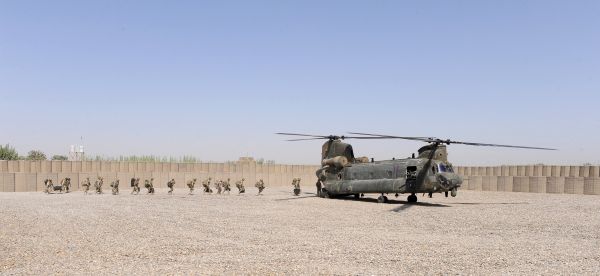
British troops leave Helmand, Afghanistan. The British Army organised symposia after each rotation, which offer a useful example of exploiting and implementing lessons learned. Photo Si Longworth
A useful example can be found in the British Army’s conduct of mission exploitation symposia during the campaign in Helmand, Afghanistan. Rather than relying solely on post-tour reports, the British Army convened centrally-led exploitation symposia after each rotation that brought together returning commanders, staffs, trainers, capability developers, knowledge institutions, industry and interagency partners. These symposia enabled the rapid identification of recurring issues such as force protection, partnering, and counter-IED measures. These directly informed changes to pre-deployment training, tactics, and equipment within compressed timelines. Critically, ownership for implementation was assigned during the symposium itself, reinforcing accountability and momentum.[42]
Within the Dutch context, exploitation symposia should be convened at defined intervals following major operations and large-scale exercises, and chaired at a sufficiently senior level to ensure authority and follow-up actions. The proposed joint cross-functional team can act as a main driver and help bridge service boundaries and different functional areas. Participation must be analogous to the British example: deployed personnel, training and doctrine authorities, acquisition stakeholders, industry and knowledge institutions. Inputs should be evidence-based, drawing on validated observations, exercise data, and international insights. Outcomes must be concrete and traceable: prioritised lessons, designated action owners, and clear timelines. These outputs should be formally captured within existing knowledge management and tracking systems to ensure transparency and accountability. By institutionalising exploitation symposia the Netherlands Armed Forces can more effectively capture experience and convert it into capability development and strengthen institutional learning.
Analytical continuity
In all organisations, personnel turnover impedes knowledge management. Within militaries, this turnover is particularly intense, with frequent reassignment by design to ensure relevant experience for service members. This volatility in career paths impedes the institutional memory of the armed forces. To overcome this challenge, the further integration of civilian analysts in the Joint Lessons Learned Process has several benefits. First of all, civilian analysts can provide long-term continuity and augment military personnel. Their sustained presence preserves institutional memory, enables longitudinal analysis across multiple operations and exercises, and reduces the recurring loss of expertise caused by the frequent personnel turnover.
Civilian analysts also contribute specialised methodological skills that complement military experience. Trained in disciplines such as data analysis, social science research, systems thinking, or organisational learning, they strengthen the rigour of observation validation, trend analysis, and causal assessment. This enhances the credibility of lessons and supports evidence-based decision-making, particularly at the operational and strategic levels.[43] Furthermore, civilian analysts offer an independent perspective that can challenge ingrained hierarchical or cultural (service) biases. Their relative distance from command structures enables more candid analysis of sensitive issues, while still operating within established security and governance frameworks. This objectivity is critical for identifying systemic issues that may otherwise remain unaddressed. Another benefit is that they can help bridge the ‘translation’ gap between military requirements and civilian-dominated policy processes. Finally, civilian capacity increases resilience and scalability within the learning process. Analysts can support deployed teams on missions, exercise exploitation, and headquarters analysis without drawing from scarce operational manpower.[44]
Conclusion
This article set out to examine how the Dutch military’s Joint Lessons Learned Process can be strengthened to better support adaptation and operational effectiveness. By structuring the analysis across theory, diagnosis, and practical improvement measures, the study sought to bridge the persistent gap between learning in principle and learning in practice within the Netherlands Armed Forces.
The first section demonstrated that the literature on military and organisational learning emphasises the interplay between bottom-up adaptation and institutional mechanisms as the key dynamic in translating experience into improvement. Armed forces that perform well in this regard treat learning as a command responsibility rather than a purely administrative function, and they invest accordingly in structures, people, and analytical capacity. This theoretical foundation provided a benchmark against which the Dutch lessons learned system could be assessed.
In the second section, three categories of barriers were identified within the Joint Lessons Learned Process of the Dutch military. Process-related barriers limit the timely exploitation and implementation of lessons. Conditional barriers, such as competing priorities and limited resources, undermine consistency and follow-through. Professional barriers, including insufficient incentives, frequent personnel rotation, and limited analytical depth, further constrain the system’s effectiveness. Taken together, these barriers do not merely affect the Joint Lessons Learned Process itself, but also have wider repercussions for readiness, operational effectiveness and the credibility of institutional learning.
Three concrete steps could initiate this transformation. First, the Defence Staff could issue a directive explicitly prioritising organisational learning and (formally) establishing the joint cross-functional team with mandate, budget, and direct access to senior leadership by the end of 2026. Second, the services could conduct a joint review of career progression criteria to ensure that assignments in knowledge development and lessons learned are recognised as career-enhancing rather than career-neutral. Third, the Defence Staff could institutionalise the first Mission Exploitation Symposium following the next major (joint) exercise or deployment, using it to demonstrate the value of this approach and refine the methodology for future iterations.
Collectively, these findings underline that improving the Joint Lessons Learned Process is not a technical adjustment, but an organisational and even cultural challenge. The Dutch military already possesses many of the necessary components and valuable bottom-up initiatives; what is required is greater coherence, professionalisation, and leadership commitment. By implementing the proposed action themes, the Ministry of Defence can visibly link operational experience to tangible change, reinforce a learning mindset across the force, and ensure that the Netherlands Armed Forces are positioned to adapt effectively in an increasingly complex security environment. The alternative – continuing with fragmented initiatives that deliver marginal improvements – would leave the Netherlands Armed Forces ill-prepared for the demands of high-intensity warfare on the European continent.
[1] E. de Waard and M. van der Vorm, ‘Unpacking the learning dynamics of a military task force in Afghanistan from a project-based organising perspective’, Defense & Security Analysis 40 (2024) (4) 477-498. DOI: 10.1080/14751798.2024.2392941; M. van der Vorm, The Crucible of War: Dutch and British Military Learning Processes in and Beyond Southern Afghanistan (Leiden, Leiden University, 2023).
[2] Ministerie van Defensie, Sneller Aanpassen, Minder Bloed, Weblog CDS (9 January 2026).
[3] According to NATO doctrine, a lessons learned process in a military context is defined as a procedure used ‘To identify, act, institutionalize, and share lessons to ensure learning from experience is converted into actual improvement via a formal process.’ NATO Joint Analysis and Lessons Learned Centre, The NATO Lessons Learned Handbook, Fourth Edition, Lisbon (2022) 9.
[4] Prof Dyson gratefully acknowledges the support of the UK Economic and Social Research Council who supported the research undertaken by himself and the project Post-doctoral Fellow, Dr John Tull, via grant ES/V004190/1.
[5] Prof Dyson and Dr Tull - with the support of Lieutenant-Colonel Dr Martijn van der Vorm - conducted 74 interviews spanning hierarchical levels of officers and officials participating in multiple phases of organisational development of lessons-learned processes, operations, exercises and key areas of activity in the institutional military, focusing mainly on the 2013-2022 period, but with some extending up to 2024.
[6] T. Dyson, Organisational Learning and the Modern Army: A New Model for Lessons Learned Processes (Abingdon, Routledge, 2019) 17-50.
[7] S. Griffin, ‘Military innovation studies: Multidisciplinary or lacking discipline?’ Journal of Strategic Studies 40 (2019) (1-2) 198-203; M. Horowitz and S. Pindyck, ‘What is a military innovation and why it matters’, Journal of Strategic Studies 46 (2023) (1) 85-114.
[8] See for instance: B. Posen, The Sources of Military Doctrine: France, Britain and Germany between the World Wars (Ithaca, Cornell University Press, 1984); E. Kier, Imagining War: French and British Military Doctrine between the Wars (Princeton, Princeton University Press, 1997); M. Horowitz, The Diffusion of Military Power: Causes and Consequences for International Politics (Princeton, Princeton University Press, 2010).
[9] S.P. Rosen. Winning the Next War: Innovation and the Modern Military (Ithaca, Cornell University Press, 1991) 251-253.
[10] To be sure some insightful perspectives were offered, see for example: B. Gudmunsson, Stormtroop Tactics: Innovation in the German Army, 1914-1918 (New York, Praeger, 1989); M. Doubler, Closing with the Enemy: How the GI’s Fought the War in Europe, 1944-1945 (Lawrence, University Press of Kansas, 1994).
[11] A. Grissom, ‘The future of military innovation studies’ Journal of Strategic Studies, 29 (2006) (5) 919-920.
[12] See for example: W. Murray, Military Adaptation in War: With Fear of Change (New York, Cambridge University Press, 2011); M. Finkel, On Flexibility: Recovery from Technological and Doctrinal Surprise on the Battlefield (Stanford, Stanford University Press, 2011); N. Kollars (2014), ‘Military innovation’s dialectic: Gun trucks and rapid acquisition’, Security Studies 23 (2014) (4) 787-813.
[13] Important works in this regard include: T. Farrell, F. Osinga and J. Russell (eds.), Military Adaptation in Afghanistan (Stanford, Stanford University Press, 2013); C. Serena, A Revolution in Military Adaptation: The US Army in Iraq (Washington D.C., Georgetown University Press, 2011); J. Russell, Innovation, Transformation and War: Counterinsurgency Operations in Anbar and Ninewa Provinces, Iraq, 2005-2007 (Stanford, Stanford University Press, 2011).
[14] Van der Vorm, Crucible of War, 384-387.
[15] Griffin, ‘Military innovation studies’, 198-203.
[16] See for instance: R. Downie, Learning from Conflict: The U.S. Military in Vietnam, El Salvador, and the Drug War (Westport, Praeger, 1998); J. Nagl, Learning to Eat Soup with a Knife: Counterinsurgency Lessons from Malaya and Vietnam (Chicago, Chicago University Press, 2022).
[17] Dyson, Organisational Learning; F. Hoffman, Mars Adapting: Military Change during War (Annapolis, Naval Institute Press, 2021); Van der Vorm, Crucible of War.
[18] Dyson et al, ‘Battlefield Knowledge’, 7-8.
[19] Hoffman, Mars Adapting, 269-272.
[20] N. Kollars, R.R. Muller and A. Santora, ‘Learning to fight and fighting to learn: Practitioners and the role of unit publications in VIII Fighter Command 1943–1944, Journal of Strategic Studies 39 (2016) (7) 1046; Van der Vorm, Crucible of War, 365-369.
[21] Dyson et al, ‘Battlefield knowledge’.
[22] Van der Vorm, Crucible of War, 156-157.
[23] See for instance: De Waard and Van der Vorm, ‘Unpacking the Learning Dynamics’; Dyson et al, ‘Battlefield knowledge’; Van der Vorm, Crucible of War; I. Wiltenburg, Adapting to Improve (Doctoral dissertation, Leiden University, 2024).
[24] Specifically, thematic analysis: systematically coding qualitative data to identify recurring patterns in how people experience or make sense of something. The method is explained in detail in the online supplement to Dyson et al, ‘Battlefield Knowledge’.
[25] Dyson et al, ‘Battlefield Knowledge’, 21-22.
[26] Interview, Lieutenant-Colonel 1, Netherlands Army.
[27] Van der Vorm, Crucible of War, 194-197.
[28] Interview, Lieutenant-Colonel 2, Netherlands Army.
[29] Interview, Analyst, Netherlands Armed Forces.
[30] Interview, General 1, Netherlands Armed Forces.
[31] Interview, Lieutenant-Colonel 3, Netherlands Army.
[32] Interview, Lieutenant-Colonel 2, Netherlands Army.
[33] Interview, General 2, Netherlands Armed Forces; This observation was expressed by multiple interview partners.
[34] Interview, Major, Netherlands Army.
[35] Hoffman, Mars Adapting, 44-46.
[36] The Netherlands Joint Force Command has been established in 2025 and is the successor of the Directorate of Operations.
[37] T. Dyson. ‘A revolution in military learning? Cross-functional teams and knowledge transformation by lessons-learned processes’, European Security 29 (2020) (4) 483–505.
[38] Rosen, Winning the Next War, 255.
[39] Interview, Major, Netherlands Armed Forces
[40] M. A. Hunzeker, Dying to Learn (Cornell, Cornell University Press 2021) 30.
[41] Y. Pashchuk. ‘Mobile lessons learned teams in the Armed Forces of Ukraine: Adaptation and innovations in the war (2021-24)’, Baltic Journal of Legal and Social Sciences 1 (2025) 219-29.
[42] See Dyson, Organisational Learning, 89-90; Van der Vorm, Crucible of War, 293.
[43] The Dutch military employed civilian operational analysts (as reservists) to conduct campaign assessment during operations in Afghanistan. See: Van der Vorm, Crucible of War, 154-155.
[44] Dyson, Organisational Learning, 82-83, 230-232.